
myenergi · Home battery
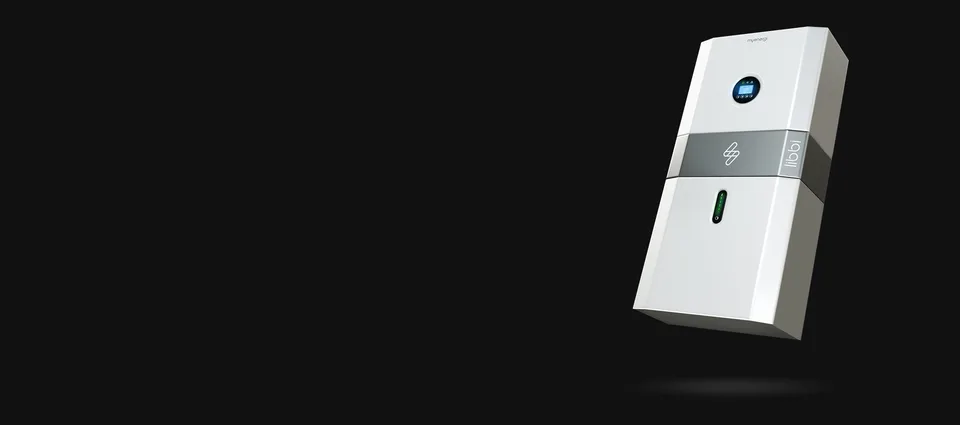
myenergi libbi
4.6 kWh usable · 5 kW hybrid inverter
A single-phase home battery system with a 5 kW hybrid inverter and one 5 kWh battery module (4.6 kWh usable).
Complete system. Includes: 5 kW hybrid inverter, one 5 kWh battery module, battery-to-inverter and interconnection cabling.
Your comparison shortlist
Specifications
Checked .
- How it’s installed
- Installer-fitted home battery ↗
- Connection details
- Not confirmed
- What this listing is
- Complete system ↗
- Usable capacity (kWh)
- 4.6 One 5 kWh battery module, 90% depth of discharge ↗
- Nominal capacity (kWh)
- 5.12 ↗
- Depth of discharge (%)
- Not confirmed
- Inverter AC output rating
- 5 kW Nominal AC output power of the 5 kW inverter, grid-connected ↗
- Maximum battery discharge power
- 4.096 kW Maximum battery charge/discharge power 2,825/4,096 W, one battery module ↗
- Short-term peak output
- 6.9 kVA Peak output apparent power 6,900 VA for 10 seconds, backup output ↗
- Coupling
- AC- or DC-coupled ↗
- Inverter
- Separate myenergi libbi 5 kW hybrid inverter included in this configuration; solar panels connect directly ↗
- Backup during a power cut
- Optional backup to a dedicated socket or lighting circuit during a power cut; extra installation work may be needed ↗
- Included hardware
- 5 kW hybrid inverter, one 5 kWh battery module, battery-to-inverter and interconnection cabling ↗
- Not included
- Not confirmed
- Battery chemistry
- Lithium iron phosphate (LFP) ↗
- Round-trip efficiency (%)
- Not confirmed
- Expansion
- Up to 4 battery modules (5 kWh each) per inverter, up to 20 kWh ↗
- Dimensions, H × W × D
- Inverter 590 × 540 × 240 mm; battery module 490 × 540 × 240 mm ↗
- Weight (kg)
- Not confirmed
- Installation and protection
- IP65 (inverter and battery) ↗
- Operating temperature
- Battery -10 °C to 50 °C; inverter -25 °C to 60 °C (output reduced above 45 °C) ↗
- Warranty
- 10 years on the battery and inverter (no capacity-retention figure published) ↗
- Manufacturer identifier
- LIBBI-505Sh
Prices and ordering
No recently checked price is available. Manufacturer’s current range.
How to compare batteries
- Capacity. Usable capacity is the energy you can draw. Nominal capacity is the total stored energy. Filters use usable capacity where published, otherwise nominal.
- Installation. Home batteries connect to household wiring through an installer or electrician. Portable power stations supply appliances through their own sockets.
- Included hardware. A module or stack needs a compatible inverter; a complete system includes one.
- Power. Compare the inverter’s AC output, battery discharge limit and peak output separately. Peak output is available only for the stated duration.
Reviews from other sites
Summaries from independent publishers, installers and owners. Each link opens the original review.
-
Owner’s experience
No Solar, No Problem: Why I Installed a Battery System
- Applies to
- 20 kWh nominal libbi installation without solar; larger than the configurations listed here. Range review.
- Review basis
- Owner account with contributions from the installer and myenergi.
- Summary
- The writer chose libbi to shift electricity use to cheaper hours before adding solar panels. He likes the app’s energy monitoring and the option to integrate solar later.
Strengths
- The writer finds the app’s energy statistics useful.
- Battery-only installation fitted his plans to add solar later.
Drawbacks
- Larger capacity than these catalogue configurations.
- Savings are the owner’s estimates.
The article includes a myenergi partner link and input from myenergi and the installer.
Find an installer
myenergi Find an Installer (libbi)
Manufacturer’s installer network.
By postcode
Find local battery installers and ask whether they fit myenergi libbi. Your enquiry will include this model.
Sources and documents
Manufacturer documents and UK supplier information.
- Midsummer Wholesale (UK) - myenergi category — checked 28 October 2026
- myenergi libbi datasheet DS-00001 Revision C (UK) — checked 28 October 2026
- myenergi UK Find an Installer (libbi) — checked 28 October 2026
- myenergi UK libbi overview page — checked 28 October 2026
- myenergi UK libbi product page — checked 28 October 2026
Compare with a similar battery
- myenergi libbi — 4.6 kWh usable · 3.68 kW hybrid inverter
- myenergi libbi — 9.2 kWh usable · 5 kW hybrid inverter
- Tesla Powerwall 3 — 13.5 kWh usable · built-in inverter up to 11.04 kW