
Best Air Source Heat Pumps UK 2026
Six current model families, compared using manufacturer data — plus the real costs, grants and installation checks that decide whether any of them will work well in your home.
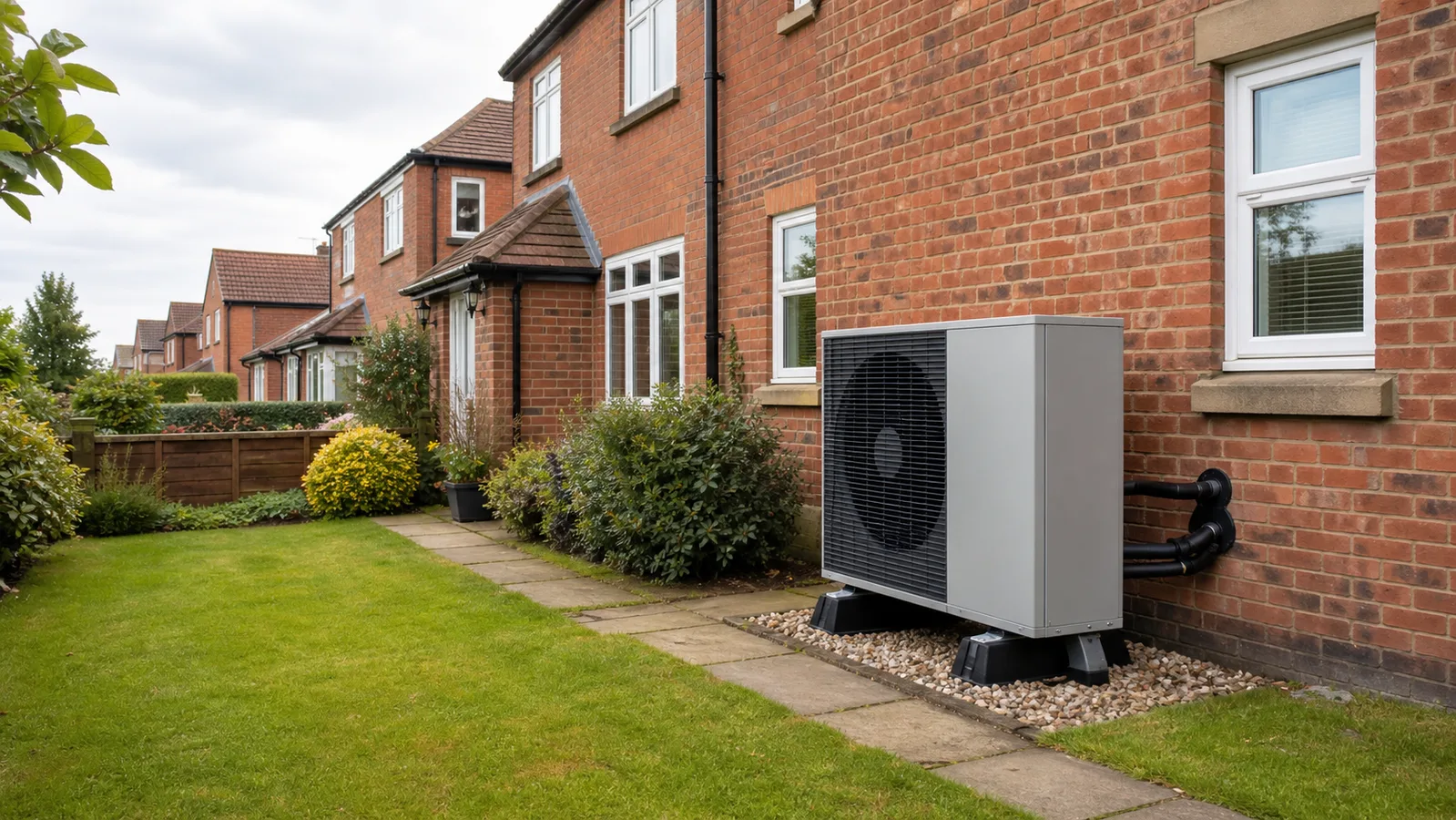
The best heat pump is not the one with the highest laboratory COP or hottest possible water. It is the correctly sized system that meets every room’s heat loss at a sensible flow temperature, fits the site and comes with competent local support.
What changed in this August 2026 review
- Removed fixed £400–£600 annual-savings promises. Current running costs depend on system performance, tariff and the heating system replaced.
- Replaced subjective 10-point model scores and unstable unit-only prices with current manufacturer specifications and quote checks.
- Added the targeted £9,000 BUS rate, the current EPC rule change, 0% VAT end date and England’s revised permitted-development limits.
- Replaced discontinued or older comparison entries with current R290 product families.
Manufacturer data checked 5 August 2026
Six current models to shortlist
These are not universal rankings. A model stays on the shortlist only if the installer can show that its exact output, sound and efficiency suit your design.
A flexible retrofit shortlist
Vaillant aroTHERM plus
A broad output range, low-temperature design emphasis and high-temperature hot-water capability make it worth quoting for both radiator and underfloor-heating projects.
- Published output
- 3.5, 5, 7, 10 and 12 kW
- Temperature
- Up to 75°C for hot water; Vaillant says 35–55°C is the preferred heating range
- Refrigerant
- R290
- Published efficiency
- SCOP up to 5.03
A current UK-made product family
Mitsubishi Electric Ecodan R290
The current R290 range covers common domestic design loads and is manufactured at Mitsubishi Electric’s Livingston factory.
- Published output
- 5, 6, 8.5, 10 and 12 kW
- Temperature
- Water temperature up to 75°C; operation down to -25°C
- Refrigerant
- R290
- Published efficiency
- A+++ at 35°C
A high-temperature retrofit option
Daikin Altherma 4 H
Daikin’s current high-temperature family can work with radiators, heat-pump convectors or underfloor heating and offers separate-cylinder or all-in-one indoor configurations.
- Published output
- Installer-selected power ratings
- Temperature
- Domestic hot water up to 65°C; operation down to -28°C
- Refrigerant
- R290
- Published efficiency
- Up to A+++
A compact modernisation option
Viessmann Vitocal 150-A
The range spans small to relatively high domestic loads, supports cooling and uses Viessmann’s connected controls and energy-management platform.
- Published output
- 2.1–14.9 kW rated range
- Temperature
- Up to 70°C at -10°C outside
- Refrigerant
- R290
- Published efficiency
- COP up to 5.0 at A7/W35
A hydraulic-split R290 option
Panasonic Aquarea L Generation
The hydraulic connection keeps refrigerant outside the home and the published data includes performance at several air and water temperatures.
- Published output
- 5 and 9 kW hydraulic-split models
- Temperature
- Up to 75°C water outlet at -10°C outside
- Refrigerant
- R290
- Published efficiency
- A+++ at 35°C
A wide-output range with a long conditional guarantee
Grant Aerona 290
Grant publishes unusually detailed 35°C and 55°C performance and sound data across the range, and trained G1 installers can offer a seven-year guarantee subject to terms.
- Published output
- 4, 6.5, 9, 12 and 15.5 kW
- Temperature
- Published at both 35°C and 55°C test points
- Refrigerant
- R290
- Published efficiency
- SCOP 4.56–5.08 at 35°C, by model
| Model family | Published output | High-temperature claim | Best question to ask |
|---|---|---|---|
| Vaillant aroTHERM plus | 3.5, 5, 7, 10 and 12 kW | Up to 75°C for hot water; Vaillant says 35–55°C is the preferred heating range | Do not treat the 75°C headline as the normal space-heating target. Lower design flow temperatures generally improve seasonal efficiency. |
| Mitsubishi Electric Ecodan R290 | 5, 6, 8.5, 10 and 12 kW | Water temperature up to 75°C; operation down to -25°C | Check the exact model’s declared output at your winter design condition, not only its nameplate size or mild-weather figure. |
| Daikin Altherma 4 H | Installer-selected power ratings | Domestic hot water up to 65°C; operation down to -28°C | Ask the installer to name the exact indoor and outdoor model codes: headline specifications vary across the family and test conditions. |
| Viessmann Vitocal 150-A | 2.1–14.9 kW rated range | Up to 70°C at -10°C outside | COP at A7/W35 is a laboratory operating point, not an annual bill forecast. Request the quote’s predicted seasonal performance. |
| Panasonic Aquarea L Generation | 5 and 9 kW hydraulic-split models | Up to 75°C water outlet at -10°C outside | The published COP falls as flow temperature rises. Compare the quotation at the flow temperature your radiators actually need. |
| Grant Aerona 290 | 4, 6.5, 9, 12 and 15.5 kW | Published at both 35°C and 55°C test points | The 55°C SCOP figures are lower than the 35°C figures. Confirm the intended design temperature and guarantee conditions in writing. |
Product families, model ranges and external links are manually re-checked once a quarter. Always ask for the exact model code on the quotation.
Costs: price the system, not the outdoor box
The Energy Saving Trust’s current typical figure is around £12,000 installed. That is a useful benchmark, not a price promise. A complete quote may include the outdoor unit, cylinder, controls, pumps, radiator or pipework changes, electrical work, foundations, condensate drainage, commissioning and making good.
Ask every quote to separate
- Heat pump, cylinder and controls
- Radiator, pipework and electrical changes
- Groundwork, access and making good
- BUS deduction and any non-eligible work
- Warranty, servicing and monitoring
We removed unit-only prices
A cheap appliance can sit inside an expensive or poorly designed system. Manufacturers rarely publish a comparable installed price, and online unit prices omit much of the work that determines comfort and performance.
Running costs: there is no honest universal saving
The current Energy Saving Trust guidance says a standard air source heat pump generally costs slightly more to run than a new gas or oil boiler. Savings are more likely against direct electric, storage heating, LPG or older inefficient systems. A good comparison uses your annual heat demand, the quoted seasonal performance, your tariff and whether removing gas also removes its standing charge.
Treat SCOP labels as comparison data under standard test conditions. Government field evidence uses lower whole-system seasonal figures in some scenarios, which is why the installer’s room-by-room design and operating-temperature assumptions matter more than a brochure maximum. Read our heat pump versus gas boiler guide for a fuller comparison.
Start with the home
Is your home suitable?
Most home types can use a heat pump, but not every home is ready for the same system or temperature. The survey must resolve these six points before a model is chosen.
- Room-by-room heat loss: fabric, dimensions, ventilation and the local winter design temperature.
- Emitters: radiator or underfloor output at the proposed flow temperature in every room.
- Hot water: cylinder space, household demand and recovery strategy.
- Outdoor site: airflow, service access, condensate, appearance and sound.
- Electrical capacity: dedicated supply and any consumer-unit or network work.
- Controls: weather compensation, zones and a clear handover plan.

Insulation is useful, but it is not a blanket BUS prerequisite
Improving avoidable heat loss can reduce the required output and flow temperature, but current BUS applications no longer require a valid EPC from 28 April 2026. The installer still has to design a system that heats the property properly.
Installation checklist
Get at least three system quotes. Each should be specific enough that another competent installer could understand what has been designed.
-
1
Survey and calculate
Room-by-room heat loss, hot-water demand, electrical supply, siting and sound assessment.
-
2
Design and disclose
Exact model codes, design outdoor temperature, flow temperature, emitter schedule and predicted seasonal performance.
-
3
Confirm permissions and funding
Planning route, MCS status, consumer protection, BUS amount and the 0% VAT treatment on the written quote.
-
4
Install and commission
Flush and balance the system, set the weather-compensation curve, test hot water and record commissioning values.
-
5
Handover and monitor
Controls training, warranties, MCS certificate, servicing plan and a route for correcting poor performance.
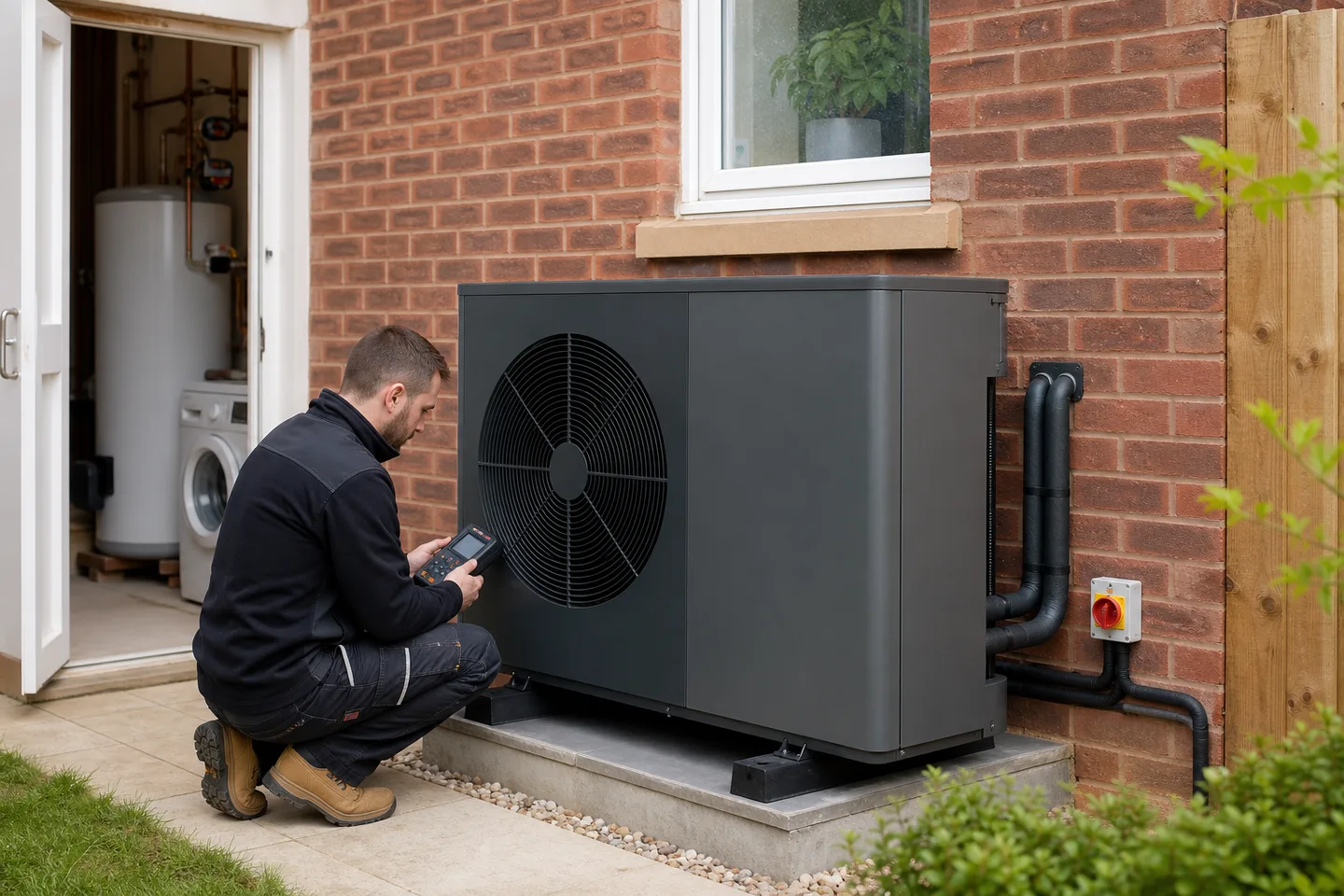
Reject a quote if it only says “8 kW heat pump”
It should also name the exact model, design heat loss, design temperatures, cylinder, emitters, electrical work, sound result, expected annual electricity use, warranty and exclusions.
Boiler Upgrade Scheme and VAT
Current BUS essentials
- Open in England and Wales; Scotland and Northern Ireland use different support.
- An MCS-certified installer applies and deducts the voucher from the quotation and invoice.
- The old heating system can be fossil fuel or eligible direct electric heating, but not an existing heat pump.
- Hybrid systems are not eligible for the heat-pump grant.
- A valid EPC is no longer required for applications properly made from 28 April 2026.
0% VAT has an end date
Qualifying heat-pump materials supplied by the installer and the installation work are zero-rated until 31 March 2027. From 1 April 2027, HMRC says the reduced 5% rate returns. A standalone appliance purchase or DIY work does not automatically receive the same treatment.
Planning and noise: the current England rules
Most domestic installations can be permitted development in England, but only when every national and local condition is met. The old blanket requirement to keep the unit at least one metre from the property boundary was removed in May 2025.
- No permitted-development installation on a pitched roof; a flat-roof unit must be at least one metre from the roof edge.
- Permitted-development rights do not cover a listed building’s curtilage or a scheduled monument.
- Conservation areas, World Heritage Sites, highway-facing locations and local restrictions need additional checks.
- The unit must not be solely for cooling and should minimise its effect on appearance and local amenity.
This summary is for England. Check the current route with the relevant authority in Wales, Scotland or Northern Ireland. For England, use the Planning Portal’s current air-source heat-pump limits and ask the installer for the completed MCS 020 a sound calculation.
Frequently asked questions
How much does an air source heat pump cost in the UK?
The Energy Saving Trust’s current typical installed figure is around £12,000, before grant support. Your quote can be higher or lower depending on heat-pump size, cylinder, radiator and pipework changes, electrical work and property access.
Is an air source heat pump cheaper to run than a gas boiler?
Not automatically. The Energy Saving Trust currently says a standard air source heat pump generally costs slightly more to run than a new gas or oil boiler. A well-designed system, a suitable tariff and removing the gas standing charge can improve the comparison, so use the installer’s property-specific forecast.
What Boiler Upgrade Scheme grant can I get?
For an eligible air-to-water installation in England or Wales, the standard grant is £7,500. Until 31 March 2027, eligible properties with no mains-gas connection replacing oil or LPG heating can receive £9,000. The MCS-certified installer applies and deducts the grant from the price.
Do I need to replace all my radiators?
No. A room-by-room heat-loss calculation may show that some existing radiators are adequate and others need changing. The relevant question is whether every room can meet its design heat loss at the proposed flow temperature.
Do air source heat pumps work in cold weather?
Yes, correctly selected modern products are designed to operate below typical UK winter temperatures. Output and efficiency change with outdoor and water temperature, so the installer must size the system using the local winter design temperature rather than a headline maximum.
Do I need planning permission for an air source heat pump?
Many domestic installations in England are permitted development if every condition is met, including the MCS 020 a sound calculation and limits on size, location and number of units. Listed buildings, scheduled monuments and some designated locations need extra care. Rules differ across the UK, so check the relevant planning authority.
How noisy is an air source heat pump?
Do not compare a single decibel headline across brands: sound power and sound pressure are different measurements. In England, an installation relying on permitted development must pass the MCS 020 a calculation at the relevant neighbouring assessment positions.
What maintenance does a heat pump need?
Follow the manufacturer’s service schedule, commonly an annual professional service, and keep the outdoor unit clear of leaves, bins and other obstructions. The service scope and warranty conditions vary, so get both in writing before purchase.
Related Guides
Compare complete heat-pump designs
Shortlist the installer first, then the appliance. Ask each company for the same heat-loss, flow-temperature, running-cost and sound evidence so the quotes are genuinely comparable.